
Introduction
Opening and closing window blinds several times a day may seem like a small task, but it can become inconvenient when you have many windows, large coverings, or windows that are difficult to reach. You may need to adjust blinds in different rooms every morning, close them for privacy in the evening, or change their position throughout the day to manage sunlight.
Motorized window treatments offer another way to handle these everyday tasks. Instead of adjusting each covering manually, you can use a compatible control system to operate your blinds or shades.
But what if your home already has blinds installed? Do you need to replace everything, or can your existing window coverings be motorized?
The answer depends on the type of blinds, their condition, their operating mechanism, and the motorization system being considered. Some existing window treatments may be suitable for conversion, while others may require replacement to work reliably.
This guide explains how to evaluate your existing blinds, what to consider before adding motorization, how controls work, and which practical issues to address before making a decision.
Can Existing Blinds Be Converted to Motorized Blinds?
In some cases, yes. Existing blinds may be suitable for motorization if their design, operating mechanism, size, and condition are compatible with the selected motor system.
However, motorization is not a universal upgrade that works with every window covering. A system designed for one type of blind may not work with another, and some products are manufactured specifically for motorized operation.
The first step is identifying what you currently have.
For example, a window covering that raises and lowers using a cord may have different requirements from one that tilts horizontal slats. Roller shades also operate differently from many traditional blinds.
The condition of the existing covering matters, too. If the mechanism already sticks, the slats are damaged, or the fabric does not move smoothly, adding a motor may not solve the underlying problem.
What should you evaluate?
Before purchasing a motor or control system, consider these questions:
- What type of window covering is installed?
- Does it open, close, tilt, or roll using a manual mechanism?
- Does it move smoothly through its full range?
- Are the headrail, mounting brackets, and other components in good condition?
- Is there enough space for the proposed motor and related hardware?
- Is a compatible motorization option available for that specific product?
If you cannot identify the type or model of your blinds, photographs and product information may help a window treatment professional assess the available options.
Do not purchase a motor based on appearance alone. Two blinds may look similar but have different internal mechanisms that affect compatibility.
Which Types of Window Coverings May Be Suitable for Motorization?
Different window coverings have different operating requirements. Understanding the design of your existing blinds can help you determine whether conversion is realistic.
Roller shades
Roller shades use a rolling mechanism to raise or lower fabric around a tube. Their relatively straightforward movement can make them candidates for motorization, depending on the design and available motor system.
Before converting an existing roller shade, check the tube, mounting brackets, fabric condition, and operating mechanism.
A damaged tube or shade that rolls unevenly may need attention before motorization is considered. The motor must also be suitable for the shade’s dimensions and operating requirements.
Horizontal blinds
Horizontal blinds generally use a mechanism to raise or lower the blind and another mechanism to tilt the slats.
These functions may require different motorization arrangements. A system that controls lifting may not automatically provide motorized slat tilting.
If your goal is to control both functions, confirm that the proposed solution supports them. Also check whether the existing headrail and internal mechanisms are compatible.
Vertical blinds
Vertical blinds typically use rotating slats and a mechanism that moves them along a track.
Because opening, closing, and rotating the slats involve different movements, compatibility depends on the design of the existing system.
Inspect the track and carriers to make sure the blinds move freely. A track that catches or has damaged components may need repair before a motorized system can operate effectively.
Roman and other fabric shades
Fabric shades vary in construction and lifting arrangements. Some use cords or internal mechanisms that may be suitable for particular motorization systems, while others may require a purpose-built motorized product.
The weight of the fabric, the lifting arrangement, and the available installation space all influence the decision.
A professional assessment can help establish whether conversion is practical or whether replacing the shade would provide a more reliable result.
When Is Replacing Your Existing Blinds the Better Option?
Motorizing existing blinds may sound appealing because it allows you to retain your current window coverings. However, keeping the existing product is not always the most practical choice.
If the blinds are old, damaged, or difficult to operate, adding a motor may introduce extra cost without addressing the underlying condition.
Signs that replacement deserves consideration
Look for problems such as:
- Slats that are bent, broken, or missing.
- Fabric that is torn, stained, or no longer rolls evenly.
- A headrail or track that is damaged.
- An operating mechanism that regularly sticks.
- Mounting brackets that are loose or unsuitable.
- A covering that no longer fits the window properly.
These issues should be assessed before choosing a motorization solution.
For example, if a roller shade repeatedly moves to one side, adding a motor may not correct the alignment problem. The shade or its mounting arrangement may need to be repaired first.
Similarly, if a blind requires excessive force to raise or lower, the cause should be identified rather than asking a motor to compensate for a faulty mechanism.
Compare the complete cost
When comparing conversion with replacement, consider more than the initial price of the motor.
Include the cost of compatible components, installation, any necessary repairs, and future maintenance. Compare that total with the cost of a new motorized window treatment that is designed for the intended use.
If the existing blinds are in excellent condition, conversion may be worth exploring. If several components already need replacement, a new motorized system may be a more sensible long-term option.
The right decision depends on the specific product and your priorities rather than a general rule that conversion is always cheaper.
How Do Motorized Blinds Work?
Motorized blinds use a motor to perform the movement normally handled by a manual operating mechanism. Depending on the system, the motor may raise or lower a covering, rotate slats, or perform another supported movement.
A control method tells the motor when to operate.
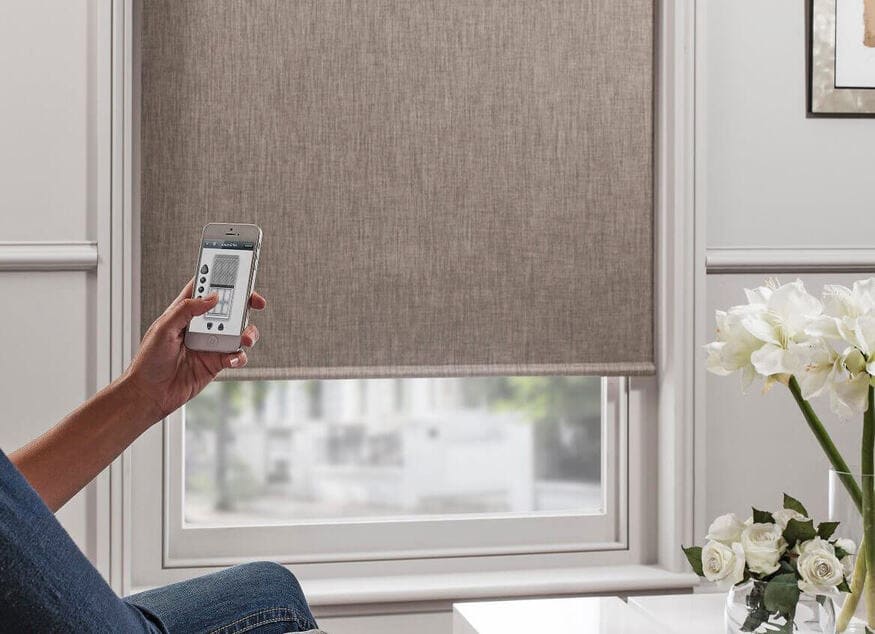
The exact arrangement depends on the product. Some systems use a dedicated remote, while others support a smartphone application or integration with a compatible smart home system.
Before choosing a system, understand which functions you want to control and which controls are included.
Remote-controlled operation
A remote can allow you to operate compatible window coverings without walking to each window.
This may be useful when blinds are installed across a large room or in locations that are inconvenient to reach.
If you are considering remote control, check how many coverings the system can operate and whether each blind can be controlled individually or as part of a group.
Smartphone control
Some motorized systems support operation through a smartphone application.
Depending on the product, this may allow you to adjust coverings from your phone, manage supported groups, or access additional settings.
However, smartphone control is not automatically available with every motorized blind. Some systems require a compatible controller or other hardware.
Check the manufacturer’s specifications before assuming that a particular motor will work with your preferred control method.
Smart home integration
Certain motorized window treatments can connect with compatible smart home systems. This may allow them to operate alongside other supported devices or follow scheduled routines.
Compatibility is essential. A blind that works with its own remote may not necessarily support the smart home platform you already use.
Before choosing a product, confirm the supported platforms, required accessories, and any limitations on the functions available through integration.
Do Motorized Blinds Need Batteries or Electrical Wiring?
Motorized window treatments can use different power arrangements. Some rely on batteries, some use rechargeable power systems, and others require an electrical connection.
The appropriate option depends on the product, the installation location, the size of the covering, and the manufacturer’s requirements.
Battery-powered systems
Battery-powered options can be useful when installing electrical wiring would be inconvenient or undesirable.
However, battery operation requires planning for charging or replacement. The frequency depends on the particular system and how often the blinds are used.
Before selecting a battery-powered motor, check how the batteries are accessed and whether they can be serviced without removing the entire window covering.
Rechargeable systems
Some products use rechargeable power arrangements. These can reduce the need for frequent battery replacement, but they still require a practical charging process.
Consider whether the motor or charging connection will be easy to reach once the blind is installed.
A system placed above a tall window may require more planning than one installed within easy reach.
Hardwired systems
Some motorized window treatments use an electrical connection.
This option may suit installations where wiring can be planned as part of the project. However, the requirements depend on the selected product and building conditions.
Electrical work should be handled by a qualified professional when required. Do not assume that an existing outlet or nearby wiring is suitable for a motorized blind.
The best choice is the one that meets the product’s requirements while remaining practical for everyday use and future maintenance.
Will Motorized Blinds Work With Your Existing Smart Home Setup?
Smart home compatibility is worth checking before you buy a motorization system, especially if you already use connected devices around your home.
The key is distinguishing between a motorized blind and a motorized blind that supports your preferred smart home controls.
A product may offer remote operation without supporting app-based control. Another may require an additional hub or controller to connect with a compatible system.
What to check before buying
Start by identifying the smart home platform and control features you want to use.
Then confirm:
- Whether the motor supports your preferred platform.
- Whether an additional hub or controller is required.
- Whether individual and grouped controls are supported.
- Whether scheduled operation is available.
- Whether the desired functions work without additional equipment.
- Whether the system has any connection or operating limitations.
Avoid assuming that all products described as smart blinds offer the same capabilities.
If you want the blinds to operate automatically at specific times, confirm that the selected system supports scheduling. If you want voice-based control, verify compatibility rather than relying on a general smart home label.
Make the decision based on the functions you will actually use. A straightforward remote may be enough for some households, while others may benefit from broader integration.
Can Motorized Blinds Help With Sunlight, Privacy, and Daily Comfort?
Motorized window treatments can make it easier to adjust light and privacy throughout the day. Their practical value depends on how the rooms are used, where the windows are located, and which functions the system supports.
For example, a living room may receive strong sunlight during certain hours. A bedroom may need privacy in the evening, while a home office may require adjustments to reduce glare on a screen.
Motorization allows compatible coverings to be adjusted without manually reaching each window.
Managing sunlight
You can operate the coverings when sunlight becomes uncomfortable or interferes with activities.
If the system supports scheduling, you may be able to set regular operating times instead of adjusting each covering manually every day.
However, motorization does not automatically make a window covering more effective at blocking heat or light. Those results depend on the material, design, fit, and other characteristics of the covering itself.
Maintaining privacy
Motorized operation can make it easier to close window coverings when privacy is needed.
This can be particularly convenient for windows that are positioned behind furniture or in hard-to-reach areas.
If privacy is your main concern, make sure the selected covering provides the level of coverage you need. A motor only changes how the covering operates; it does not change the privacy characteristics of the material.
Improving everyday convenience
For households with several windows, grouped controls may reduce the time spent adjusting coverings individually, provided the selected system supports that function.
The main benefit is simpler operation. Whether that convenience justifies the cost depends on how often you adjust the blinds and how difficult the existing manual controls are to use.
What Happens if Motorized Blinds Stop Working?
Like other mechanical and electrical products, motorized window treatments can occasionally develop problems.
A blind may stop responding to its remote, move unevenly, make an unusual sound, or fail to complete its normal movement. The cause may be related to power, controls, an obstruction, or the motorized mechanism.
The safest first step is to identify what the system is doing rather than immediately dismantling it.
If the blind does not respond
Check the power source and remote according to the manufacturer’s instructions.
If the system uses batteries, determine whether they need charging or replacement. For a rechargeable or hardwired product, follow the appropriate troubleshooting instructions.
If several blinds stop responding at the same time, consider whether they share a controller or power source. That pattern may help identify where the problem originates.
If the blind moves unevenly
Check for visible obstructions around the covering and its accessible operating path.
Do not force the blind to move if it appears jammed or makes unusual noises. Continued operation may worsen the problem.
An uneven movement may involve the mounting arrangement, internal mechanism, or motor. If the cause is not obvious, arrange an inspection.
If the controls stop working
Confirm that you are using the correct control method and follow the manufacturer’s instructions for reconnecting or resetting the device.
Avoid performing unfamiliar resets that could remove settings or affect other connected devices.
If basic troubleshooting does not resolve the problem, consult the product documentation or seek qualified assistance. A motorized blind may need a component repair rather than complete replacement.
What Should You Ask Before Having Motorized Blinds Installed?
Before committing to a motorization project, make sure you understand the proposed system and what is included in the installation.
A few questions can help you avoid choosing equipment that does not meet your needs.
Will my existing blinds work with the system?
Ask for confirmation based on the actual product and its operating mechanism. Do not rely solely on general compatibility claims.
Which functions will be motorized?
Clarify whether the system will raise and lower the covering, tilt slats, or perform another movement. Different systems support different functions.
How will the motor receive power?
Understand whether the product uses replaceable batteries, rechargeable power, or electrical wiring.
Which controls are included?
Confirm whether you will receive a remote, smartphone control, or another supported option. Ask whether additional hardware is required for smart home integration.
What happens if the motor needs service?
Find out how the motor and related components can be accessed, what maintenance may be required, and how service issues will be handled.
Would replacement be more practical?
If your current blinds are damaged or incompatible, compare the proposed conversion with a new motorized window treatment.
These questions help you understand the complete arrangement before work begins, rather than discovering limitations after installation.
Frequently Asked Questions
Can all existing blinds be motorized?
No. Compatibility depends on the blind type, operating mechanism, condition, dimensions, and motor system. Some existing coverings can be converted, while others may need replacement.
Are motorized blinds worth the cost?
They may be worthwhile if you frequently adjust several coverings or have windows that are difficult to reach. Consider the installation cost, power requirements, maintenance, and features you will actually use.
Can motorized blinds be controlled without a smartphone?
Yes, some systems support dedicated remote controls or other non-phone control methods. Check the product specifications to confirm which options are available.
Do motorized blinds work during a power interruption?
The answer depends on the power arrangement and product design. Battery-powered systems may continue to operate while adequately charged, whereas other systems may have different limitations. Check the manufacturer’s instructions for the specific product.
Should I replace damaged blinds before adding a motor?
You should assess the damage first. A motorization system may not correct a damaged track, worn mechanism, or poorly aligned covering. Repairing the existing product or replacing it may be more practical.
Conclusion
Motorizing existing blinds can be a practical way to simplify everyday window adjustments, but compatibility should always come first. The type of covering, condition of its operating mechanism, available space, power requirements, and desired controls all affect whether conversion is possible.
Before purchasing equipment, identify your current blinds and confirm that the proposed motorization system supports them. Compare the complete cost of conversion with replacement, and make sure the final setup provides the functions you actually need.
If you are exploring motorized window treatments for your home or business, KC Blind Guys provides custom window covering solutions to help you evaluate suitable options for your space.